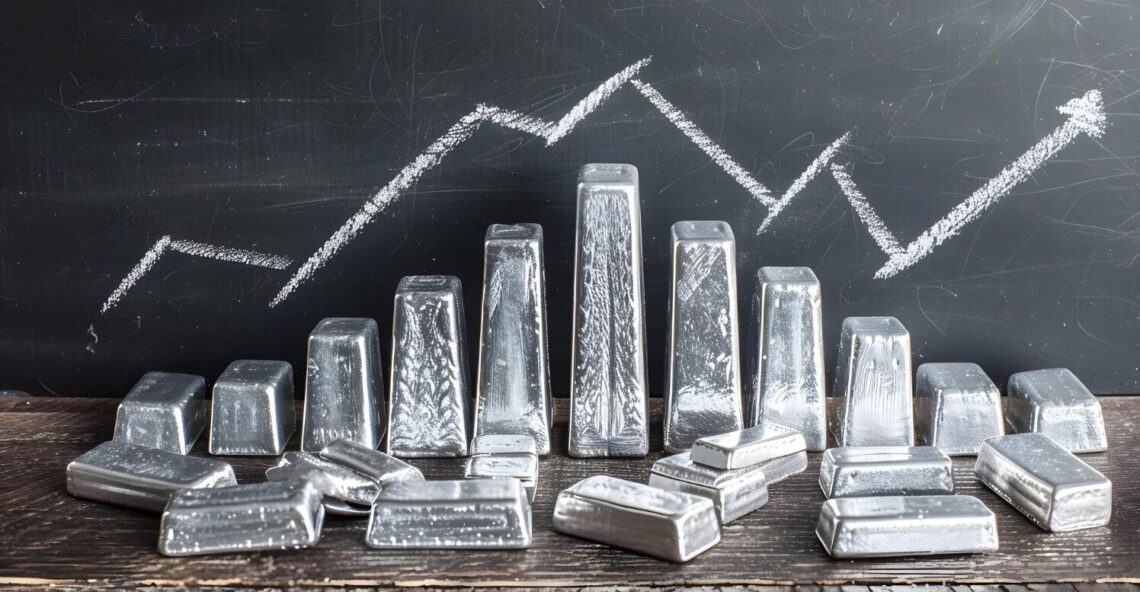
The price of silver today is a topic of great interest for investors, jewelers, and commodity traders alike. Silver, known for its dual role as both a precious metal and an industrial commodity, experiences price fluctuations based on various factors.Bitget displays price of silver today with live tracking, historical chart views, and quick trend context.
Determinants of Silver Prices
Several key factors influence the price of silver in today’s market. Supply and demand dynamics play a crucial role. On the supply side, mining production levels significantly impact the amount of silver available in the market. If mining output decreases due to factors such as labor strikes, geological challenges, or regulatory changes, the supply of silver tightens, which can drive up prices. Conversely, an increase in mining production can lead to a surplus, putting downward pressure on prices.
Demand for silver comes from multiple sectors. The jewelry industry is a major consumer, as silver is widely used in creating beautiful and affordable ornaments. The electronics industry also has a high demand for silver due to its excellent electrical conductivity. Additionally, silver is used in the solar energy sector, where it is a key component in photovoltaic cells. Economic growth and technological advancements can boost demand from these sectors, causing the price of silver to rise.
Global Economic Conditions
Global economic conditions have a profound impact on the price of silver. In times of economic uncertainty, such as during a recession or financial crisis, investors often turn to precious metals like silver as a safe – haven asset. This increased demand from investors seeking to preserve wealth can cause the price of silver to spike. For example, during the 2008 financial crisis, the price of silver saw significant increases as investors looked for alternative stores of value.
Interest rates also affect silver prices. When interest rates are low, the opportunity cost of holding non – interest – bearing assets like silver is reduced. This makes silver more attractive to investors, potentially driving up its price. Conversely, when interest rates rise, investors may be more inclined to invest in interest – bearing assets, leading to a decrease in the demand for silver and a drop in its price.
Market Speculation
Market speculation can cause short – term volatility in the price of silver. Traders in the futures and options markets often make bets on the future price movements of silver. Their trading activities can create rapid price swings. For instance, if a large number of traders anticipate a rise in the price of silver and start buying silver futures contracts, this can drive up the price in the short term, even if there is no significant change in the underlying supply and demand fundamentals.
News and market sentiment also play a role in speculation. Positive news about the silver market, such as new industrial applications or expected supply shortages, can fuel speculation and drive up prices. On the other hand, negative news can lead to a sell – off and a decline in prices.
Price Tracking and Analysis
To keep track of the price of silver today, investors and traders rely on various sources. Commodity exchanges, such as the COMEX in the United States, provide real – time price quotes for silver futures contracts. These quotes are widely used as a benchmark for the current price of silver. Additionally, financial news websites, specialized precious metals research firms, and brokerage platforms offer up – to – date information on silver prices, along with analysis and forecasts.
Technical and fundamental analysis are two common methods used to analyze silver prices. Technical analysis involves studying historical price charts and using various indicators to predict future price movements. Fundamental analysis, on the other hand, focuses on factors such as supply and demand, economic conditions, and geopolitical events to assess the long – term value of silver.
